BioPhorum 发布 rAAV 基因治疗效价策略路线图,涵盖细胞株选择与 TCID50 取舍
Demonstrating Gene Therapy Potency: A Strategic Road Map
BioPhorum 在 Cell & Gene 刊文提出 rAAV 基因治疗效价策略路线图,包含按研发阶段选择效价方法、细胞株选择评估及是否保留 TCID50 的决策框架。
By BioPhorum

Meeting regulatory expectations for phase-appropriate potency assessments for in vivo gene therapies is widely recognized as a challenge in the advanced therapy medicinal products industry. Regulatory expectations differ by geographic region, creating further challenges for developing a cohesive global potency strategy.
This article presents a consensus view on the complex challenge of defining potency strategy for recombinant adeno-associated virus (rAAV) gene therapy products.
To help those involved in rAAV gene therapy potency strategy development, particularly those new to the field, we have created a roadmap. This consists of visual representations of consensus approaches and considerations that users can apply to their own specific development situations and candidates.
It focuses on two industry challenges related to potency assays: cell line selection for potency testing and the TCID50 assay. This is because guidance on using representative or non-representative cell lines for potency assays is not always clear. Also, a mismatch between scientific rationale and global regulatory expectations for the TCID50 assay is difficult to reconcile.
Integrated Approach To Product Understanding
An integrated approach to product understanding, especially for potency, relies on the interplay between the quality target product profile (QTPP), critical quality attributes (CQAs), analytical target profile (ATP), risk assessment, and control strategy (see Figure 1).

Figure 1: The interplay between QTPP, CQAs, ATP, risk assessment, and control strategy
Roadmap Visuals
Phase-Appropriate Potency Assay Implementation For Release Testing
Figure 2 shows the current state and the ideal future state for determining the potency release assay at the preclinical stage.
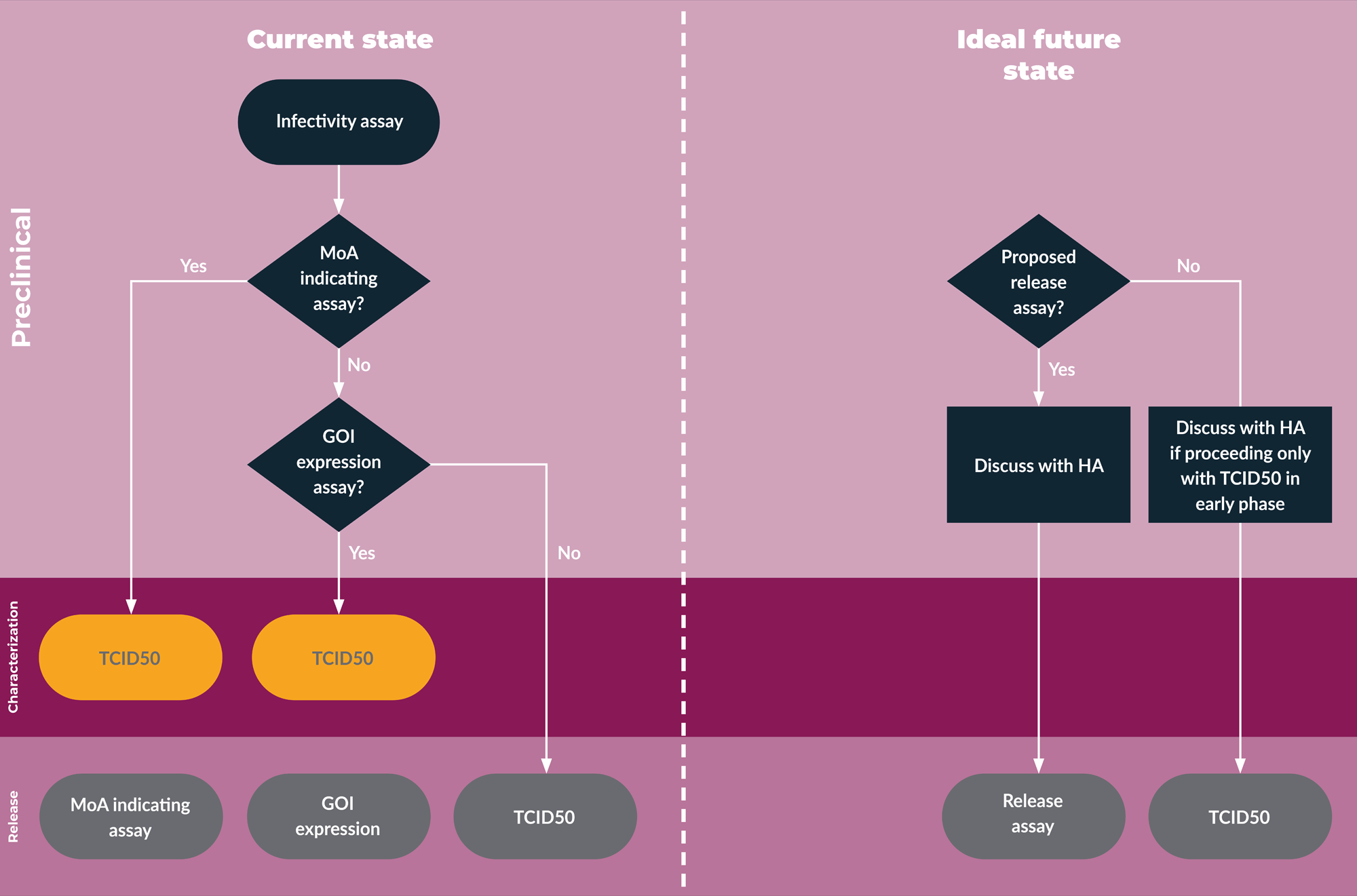
Figure 2: A simplified process desired for preclinical potency release assay selection.
Key: GOI — gene of interest, HA — health authority, MoA — mechanism of action
Click on image to enlarge.
Figure 3 shows the current state versus the ideal future state for determining the potency release assay as you progress from Phase 1 through to Phase 2/3.
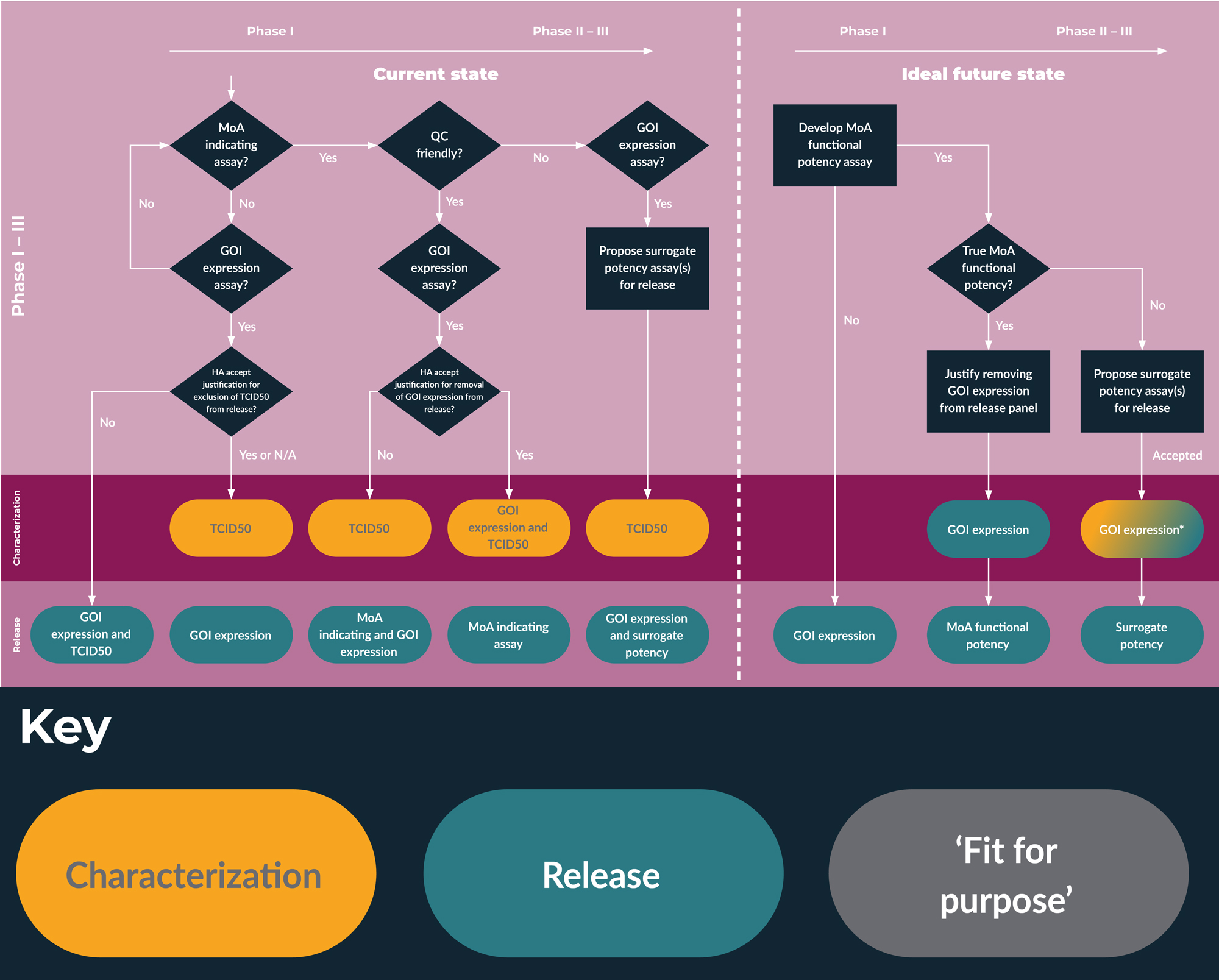
Figure 3: A simplified process desired for Phase 1 to Phase 2/3 potency release assay selection.
Key: GOI — gene of interest, HA — health authority, MoA — mechanism of action, QC — quality control
Click on image to enlarge.
Potency Assay Strategy Based On Mechanism Of Action
Figure 4 provides a decision framework for selecting a potency assay strategy based on the product’s defined mechanism of action (MoA). Starting from evidence that supports the MoA or preclinical efficacy, it guides users through consideration of the availability of a quantitative assay that directly assesses the MoA and suitability for routine quality control (QC) use. Where a direct functional assay is not practical for QC, the framework considers the use of surrogate or complementary assays, supported by appropriate bridging. The resulting strategy may use a single assay or a matrix of assays, with methods qualified for early-phase use and validated as appropriate for late-stage development and filing.
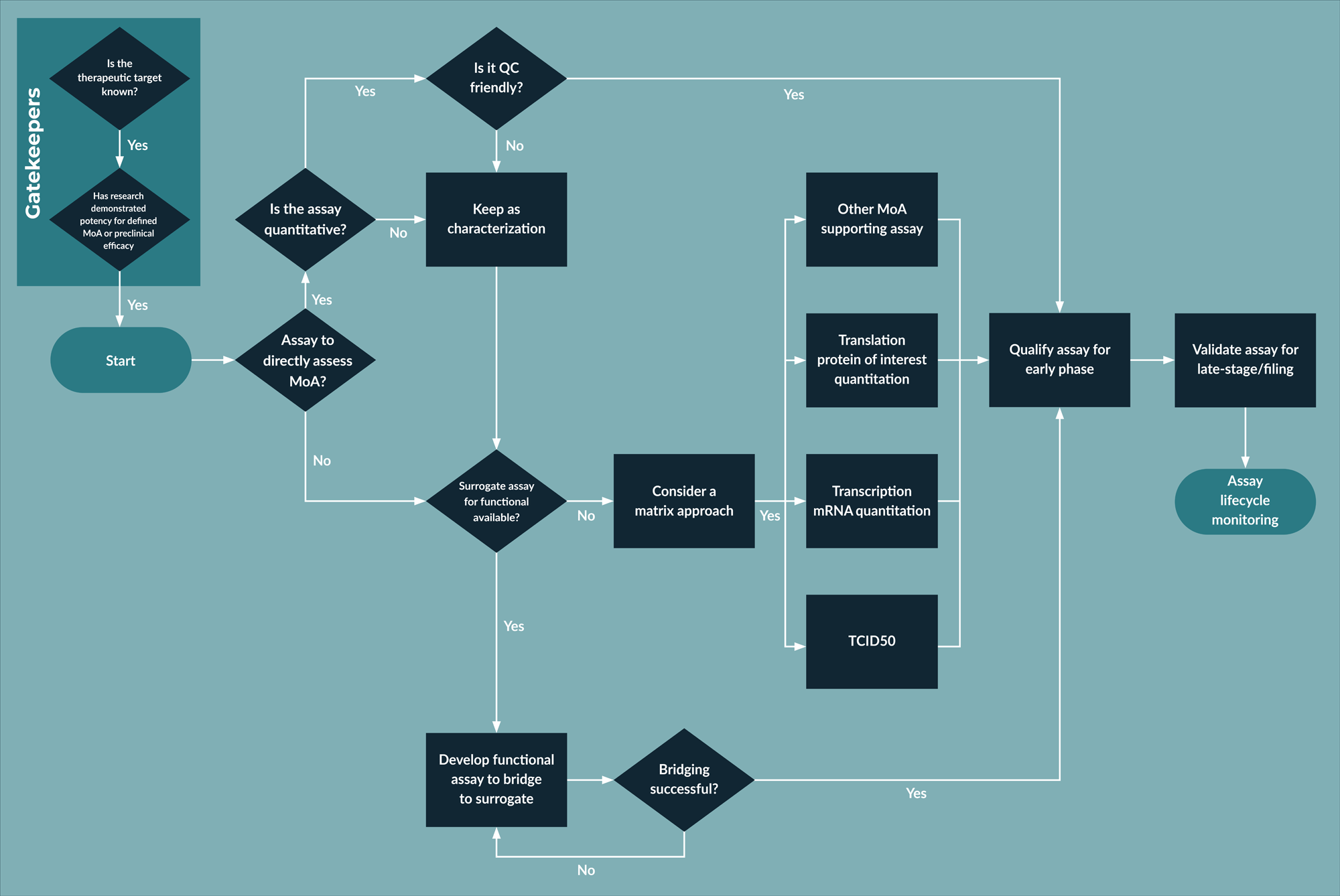
Figure 4: Decision framework for developing an MoA-based, phase-appropriate potency assay strategy.
Key: GOI — gene of interest, MoA — mechanism of action, QC — quality control
Click on image to enlarge.
Cell Line Selection
Figure 5 shows a decision framework for selecting a suitable cell line for potency testing, balancing biological relevance with practical assay performance. Starting with the intended assay, it guides users through a series of ‘gatekeeper’ assessments. Candidate cell lines are then assessed for dose response, cell behavior, and suitability for routine QC use. Where the target cell line is unavailable or unsuitable, alternative or engineered cell lines can be considered to provide the required functional utility, with the selected cell line progressing through phase-appropriate assay qualification.
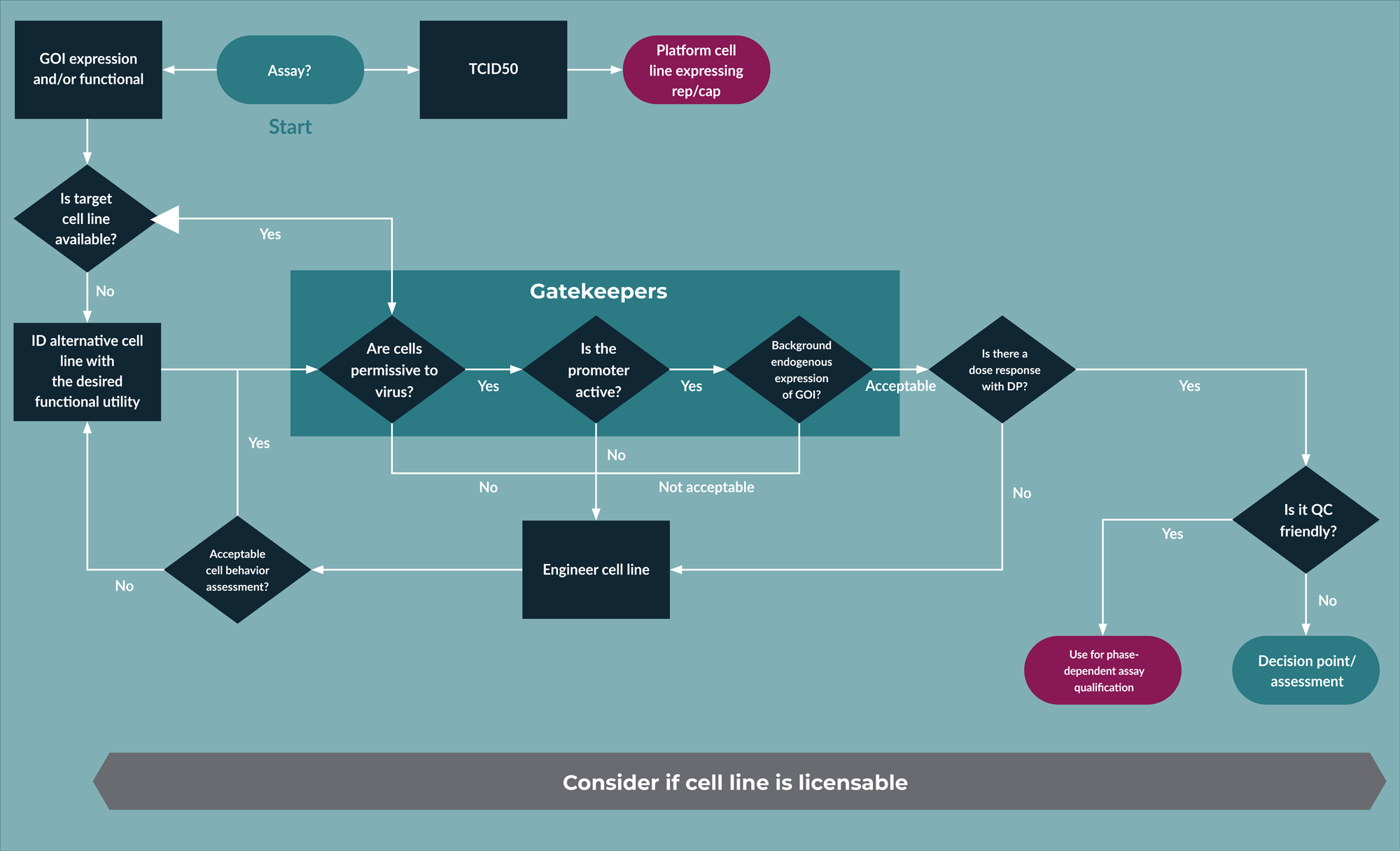
Figure 5: Decision framework for selecting and assessing a suitable cell line for potency testing, considering biological relevance, assay performance and suitability for routine QC use.
Key: GOI — gene of interest, MoA — mechanism of action, QC — quality control
Click on image to enlarge.
Justification For Non-Representative Cell Line Selection
Challenges With Representative Cell Lines
Potency assays must be robust and reproducible. A representative cell line may not express the target receptors or have the intracellular machinery required for the efficient uptake of the rAAV serotype and/or expression or function of the transgene product. Due to the challenges with the cell biology of some representative cell lines, these lines may be difficult to work with and can lead to inconsistent potency results. Over time and with multiple passages, some cell lines may lose consistency in gene expression and responsiveness, leading to cell line instability and variability in assay performance. Some cell lines may not be sensitive enough to detect small changes in potency when the MoA involves a subtle effect on intracellular signaling or downstream gene expression. Especially for rare diseases, human-derived representative cell lines are limited.
Generating a representative cell line can be time-consuming, necessitating the use of an existing cell line for early phases. This varies on a case-by-case basis (see Figure 6).

Figure 6: Comparison between representative and non-representative cell lines in cell-based assays
Benefits Of Using Non-Representative Cell Lines
Non-representative cell lines are valuable for collecting preliminary information about the MoA of a drug under development and evaluating potential readouts. Non-representative cell lines are particularly useful when representative cells are difficult to handle or are not readily available. Their use is often limited to early-phase studies due to the lack of immortalized representative lines that are commercially available. In the best-case scenario, the final cell type would be biologically relevant to the disease phenotype.
Non-representative cell lines are often more cost-effective and suitable for high-throughput applications, making method development and qualification more efficient. These lines can help standardize assays across multiple programs, improving the understanding and reproducibility of results.
Non-representative cell lines are generally easier to cultivate and maintain. These cell lines can be well-established and provide a robust, reproducible system for QC assays, ensuring feasibility during long-term use throughout the product life cycle and for large-scale screening. With non-representative cells, there can be a wider window of passages that maintain conformity; the cells may not drift as much over time compared to primary cells during the potency assay life cycle, improving assay performance and reducing variability.
Summary
It can be challenging to justify to regulatory authorities that non-representative cell lines are biologically relevant. Agencies may require extensive validation and bridging studies to demonstrate that the results apply to the intended therapeutic context. Experience shows that non-representative cell lines have been accepted by regulatory bodies when consistent and reliable results supporting the MoA are available to convince them.
Justification For Exclusion Of TCID50 From Release Panel
Differences In FDA And EMA Guidance
The difference in expectations between the FDA and EMA regarding the use of TCID50 (see Figure 7) poses a challenge when developing a coherent risk-based potency assurance strategy that can be accepted globally, and could negatively impact patients’ access to life-changing gene therapy products in certain markets.

Figure 7: Comparison of key parts of guidance relevant to the EMA and the FDA highlighting differences regarding use of TCID50
Limitations Of The TCID50
The TCID50 assay is an endpoint dilution method measuring the infectious titer of a virus. A permissive cell line is exposed to serial virus dilutions (10–12 replicates per dilution level) and wells are scored for infection based on cytopathic effect (CPE) (presence of CPE = positive or 1; no CPE = negative or 0). The ratio of positive wells to total wells per dilution level is used with the Spearman-Kärber statistical method to find the dilution at which 50% of the cells are infected (expressed in infectious units per mL).
As rAAV vectors do not produce any CPE and cannot self-replicate, the TCID50 assay was adapted to measure their so-called infectivity. Viral replication is assessed via vector genome amplification using a quantitative polymerase chain reaction or digital polymerase chain reaction. Wells are scored 0 (negative) or 1 (positive) based on whether their signal exceeds an infectivity threshold roughly corresponding to the background in control wells (i.e., cells infected with helper wild-type adenovirus only).
The TCID50 method exhibits a high degree of variability, with reported inter-assay coefficients of variation ≥35%, even when the assay precision is optimized with digital polymerase chain reaction. Due to this high variability, specifications may be too broad to be considered meaningful for controlling batch consistency and the stability of rAAV products.
The assay does not accurately predict in vivo efficacy since viral replication is not part of the rAAV MoA.
The assay’s low throughput (one rAAV batch per 96-well plate), high degree of complexity, and high failure rate question the relevance of keeping it in the release panel for rAAV-based gene therapy products.
There is limited incentive to improve the TCID50 method due to uncertainty about agency acceptance. A robust cell-based potency assay that reflects the MoA is better able to demonstrate consistency of potency across GMP batches compared to the TCID50 assay. Development efforts to improve the TCID50 method and maintain its life cycle for GMP use may distract sponsors from allocating sufficient time and resources to developing robust potency methods that reflect biological activity or MoA, which is paramount for assuring product potency and stability.
Justification For Removal Or Exclusion Of TCID50
The therapeutic effect of the product does not depend on the infectious titer of the rAAV itself, and TCID50 assay results do not accurately represent clinically relevant activity. For rAAV capsids and serotypes that are designed to target specific cell types, the TCID50 assay does not mirror the differences in vector tropism.
Even if the TCID50 assay or other infectivity assay were developed with improved precision, measuring the infectivity for rAAV products does not provide additional benefit when a functional assay is available that correlates with efficacy in the patient and/or indicates safety.
Since the infectivity of rAAV is highly dependent on the in vitro system and the relative permissivity of the cells to the specific serotype, the concept of infectious vector titer as an absolute measure of physical content is inaccurate and inappropriate for rAAV. The control of non-functional vector-related impurities (e.g., empty capsids) is better achieved using other analytical techniques such as analytical ultracentrifugation, mass photometry, optical density, polymerase chain reaction, enzyme-linked immunosorbent assay, and other methods.
Potency methods that measure transduction (expression or biological activity) of the transgene are indicative of successful infection. A vector can be infectious yet incapable of supporting expression of the transgene product. However, transgene products cannot be expressed if the vector is not infectious. Therefore, it is most desirable to have potency methods that provide a measure of the biological activity of the expressed transgene product.
Removal of TCID50 from the release and stability panel would be in line with new FDA draft guidance on potency assurance.
As part of a control strategy, when the CQAs are adequately controlled by other validated methods, the removal of the TCID50 assay does not increase product risk.
Conclusion
This roadmap addresses a critical industry challenge: demonstrating appropriate potency for in vivo gene therapies across development phases while navigating diverse global regulatory expectations.
It establishes a framework integrating product understanding, analytical methodology, and regulatory considerations. It emphasizes a phase-appropriate approach where early development may use simpler assays focused on mechanism demonstration while later phases require more comprehensive functional testing aligned with clinical outcomes.
Key strategic recommendations include:
- An integrated approach linking the QTPP, ATP, and CQAs to ensure potency reflects the product’s MoA.
- A matrix approach using complementary methods when a single assay cannot capture all relevant attributes.
- A pragmatic cell line selection with justified use of non-representative cell lines when they demonstrate suitable performance and correlation to therapeutic effect.
- A critical evaluation of traditional methods such as TCID50, with recommendations to avoid redundant testing when more clinically relevant methods are available.
- A regulatory strategy focused on scientific justification and harmonization across global authorities.
This roadmap serves as both a practical implementation guide and a foundation for continued industry alignment on potency strategy development for gene therapies. By following this roadmap, developers can create scientifically sound, regulatorily acceptable potency strategies that ultimately support the delivery of safe and effective gene therapies to patients.
This article summarizes the main points from a recent BioPhorum paper on this topic. To learn more, check out the full paper, www.biophorum.com/download/gene-therapy-potency-strategy-roadmap-a-guide-to-navigating-the-complexities-of-potency.
来源:Cell & Gene · cellandgene.com